
SOUND MIRROR
Retelling the story of a curious photographic collaboration and the zine that followed.

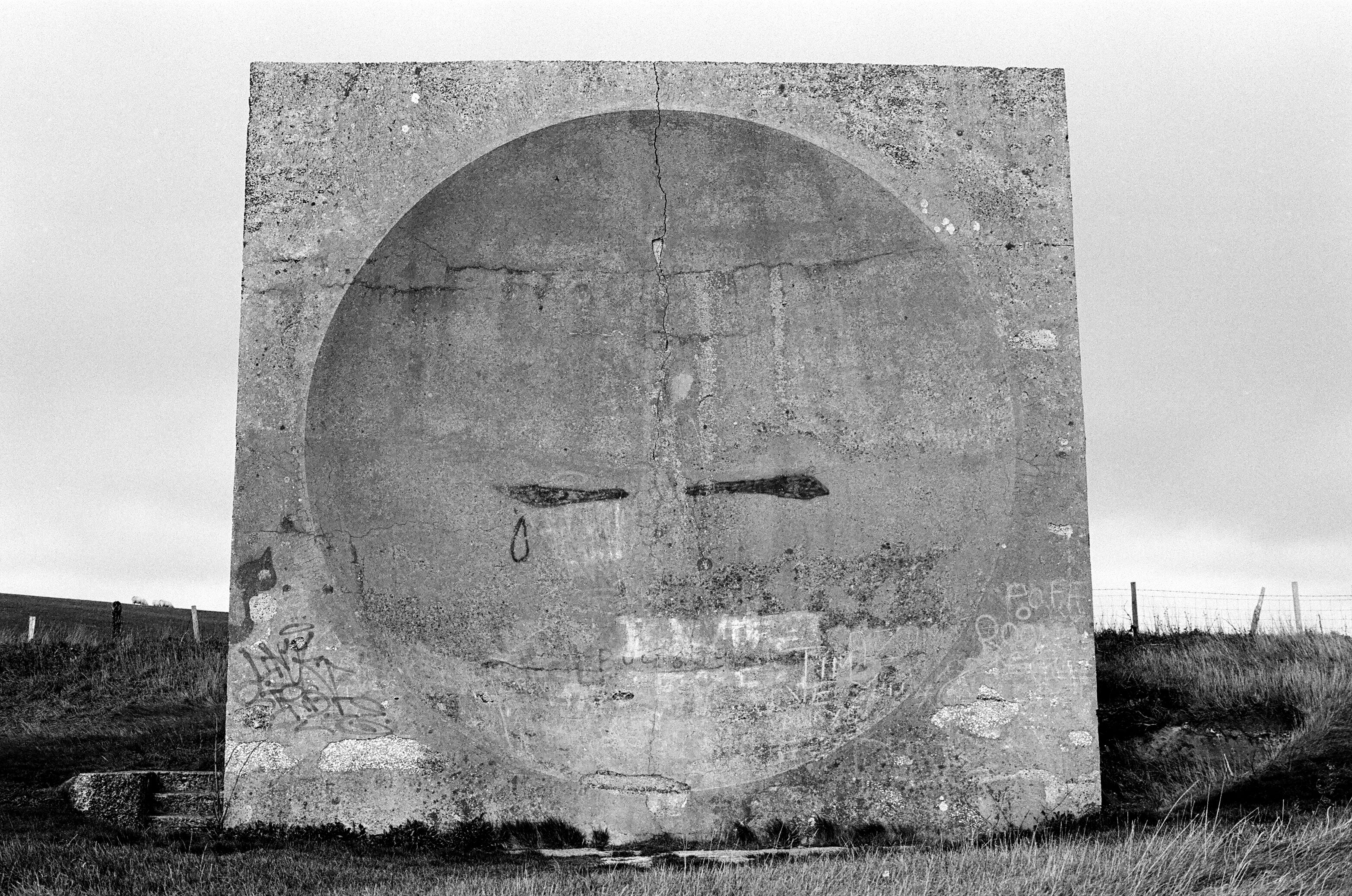
Sound mirrors once formed part of an experimental acoustic technology used to detect potential airborne threats.
These concrete structures were built in the years between WWI and WWII to amplify the distant sounds of enemy aircraft heading towards England.
CONCEPT
During the summer of 2022, my good friend Aimee spoke to me about the idea of a project to make some bespoke darkroom prints.
Aimee is a talented goldsmith and creates some incredible pieces of jewellery with a specific interest in built form, geometry and brutalist architecture.
https://aimeecraddock.co.uk/ or https://www.instagram.com/aimeecraddockjewellery
We discussed going out and photographing the ominous block of concrete pictured above, which has been a local source of inspiration for some of her work, such as the Monolith and Minilith ring pictured below.
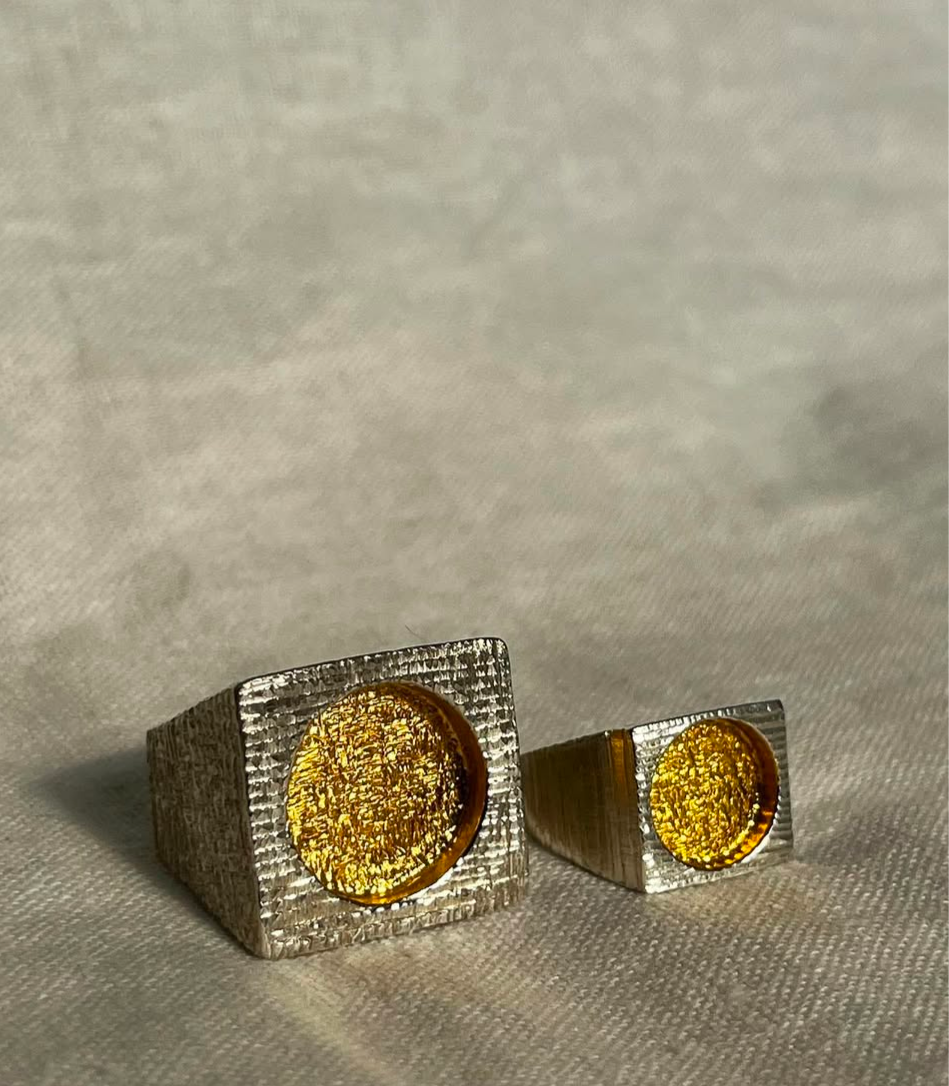
The structure is a Sound Mirror. The quotes throughout this post, all taken from the zine that subsequently emerged from this project, will explain it in a bit more detail.
Aimee asked me to capture some B&W film photographs with the intention of making some limited run prints to display and sell in her boutique shop / studio on the Old High Street here in Folkestone.
LOCATION
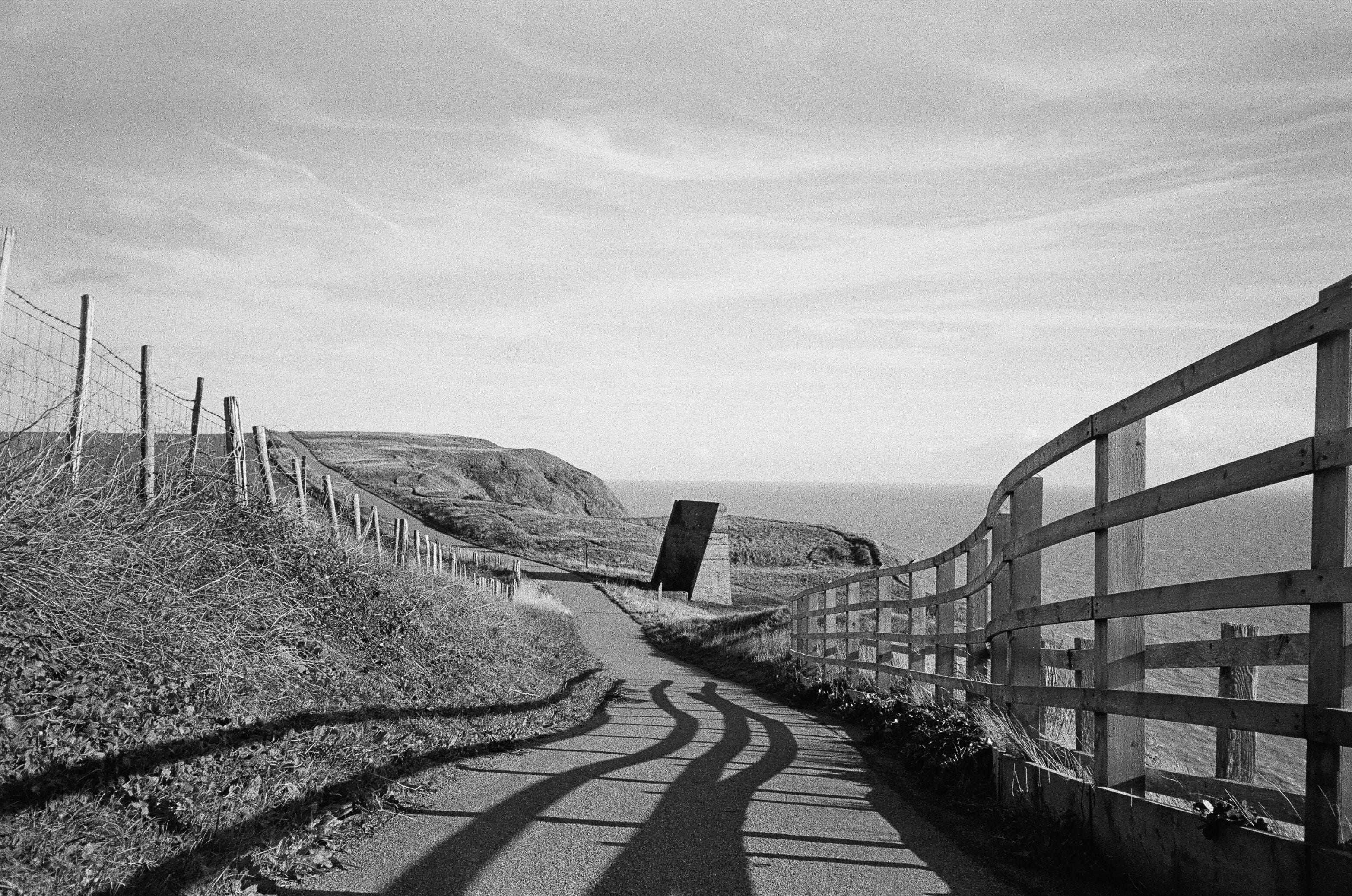
Several sound mirrors were built on the south and north-east coast of England to listen out for unknown aircraft over the Channel and the North Sea.
The one photographed was built in 1928 at Abbot’s Cliff near Folkestone.
This is one of several locations in Kent.
In November 2022, armed with my tripod, an Olympus OM-4 Ti and few rolls of Ilford film, I made the short drive from Folkestone, through Capel-le-Ferne towards the sound mirror at Abbot’s Cliff. Due to its remote location its necessary to leave the car at the end of a country lane where it turns to footpath and walk the rest of the way.
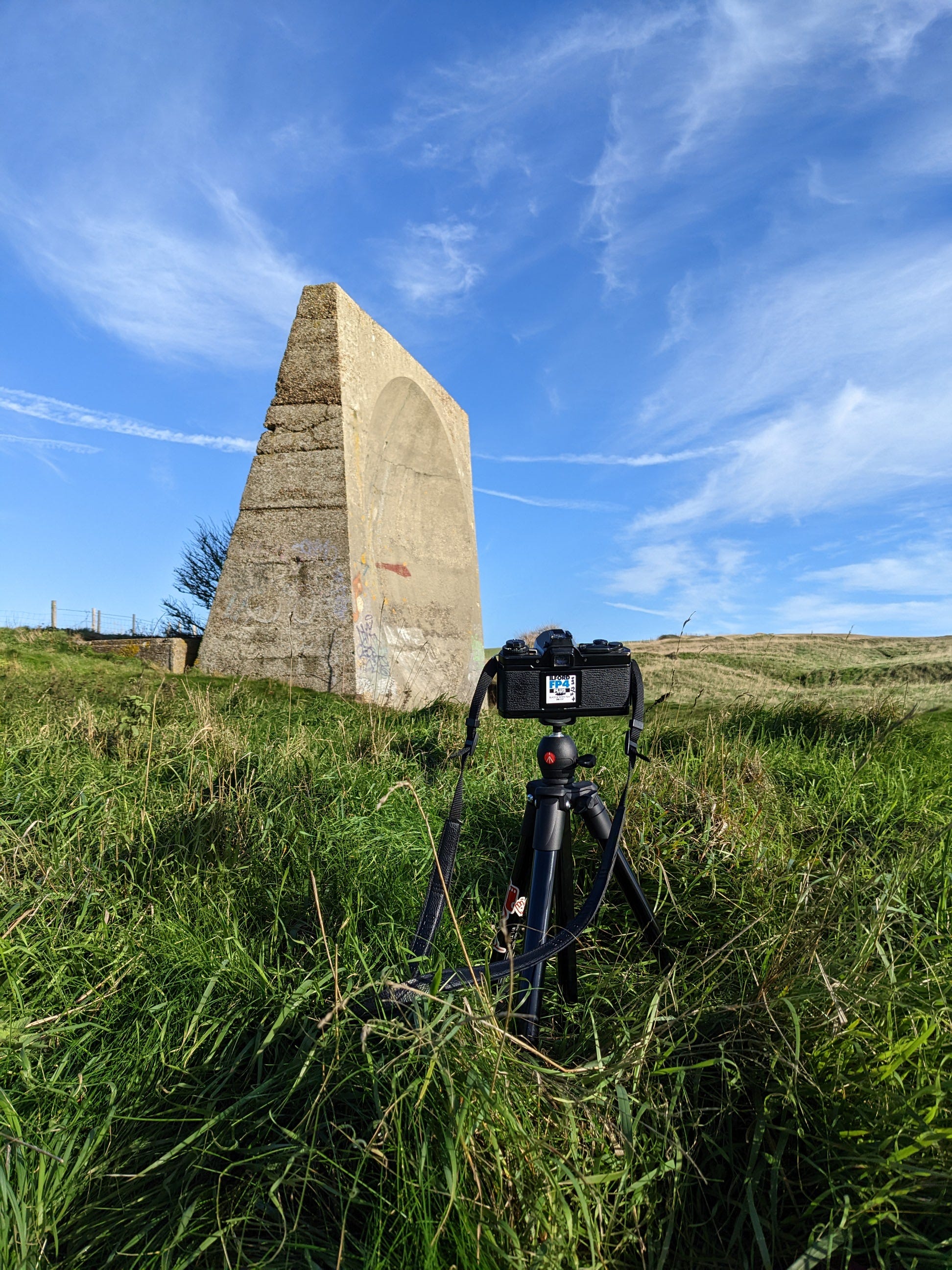
The sky above was incredible for November in the UK. Bright blue with a few wisps of cloud and insane sunlight. Though the photo above doesn’t show the temperature up on the cliffs or the strength of the wind (which weren’t so good!). I set up the tripod in various positions and shot a roll of Ilford Ortho 80 and a roll of Ilford HP5+ 400. It clouded over more while I was still shooting but I saw that as a bonus as it meant I had a mix of background skies across those films.
Now the eagle-eyed among you might notice that the piece of film carton in the back of the camera above is in fact Ilford FP4+ 125 and therein lies a funny story. I thought I had loaded that roll of FP4 at home when I was getting everything organised to head out. I had not and it was still at home! So I spent about 45 mins shooting when I got there without a film in the camera, not noticing that the rewind wheel wasn’t turning as I wound on and snapped away. Luckily as a film photographer who has made several similar mistakes I could see the funny side and the other rolls I’d planned to take were in my camera bag where they were supposed to be, so it was all good really.
PRINTING
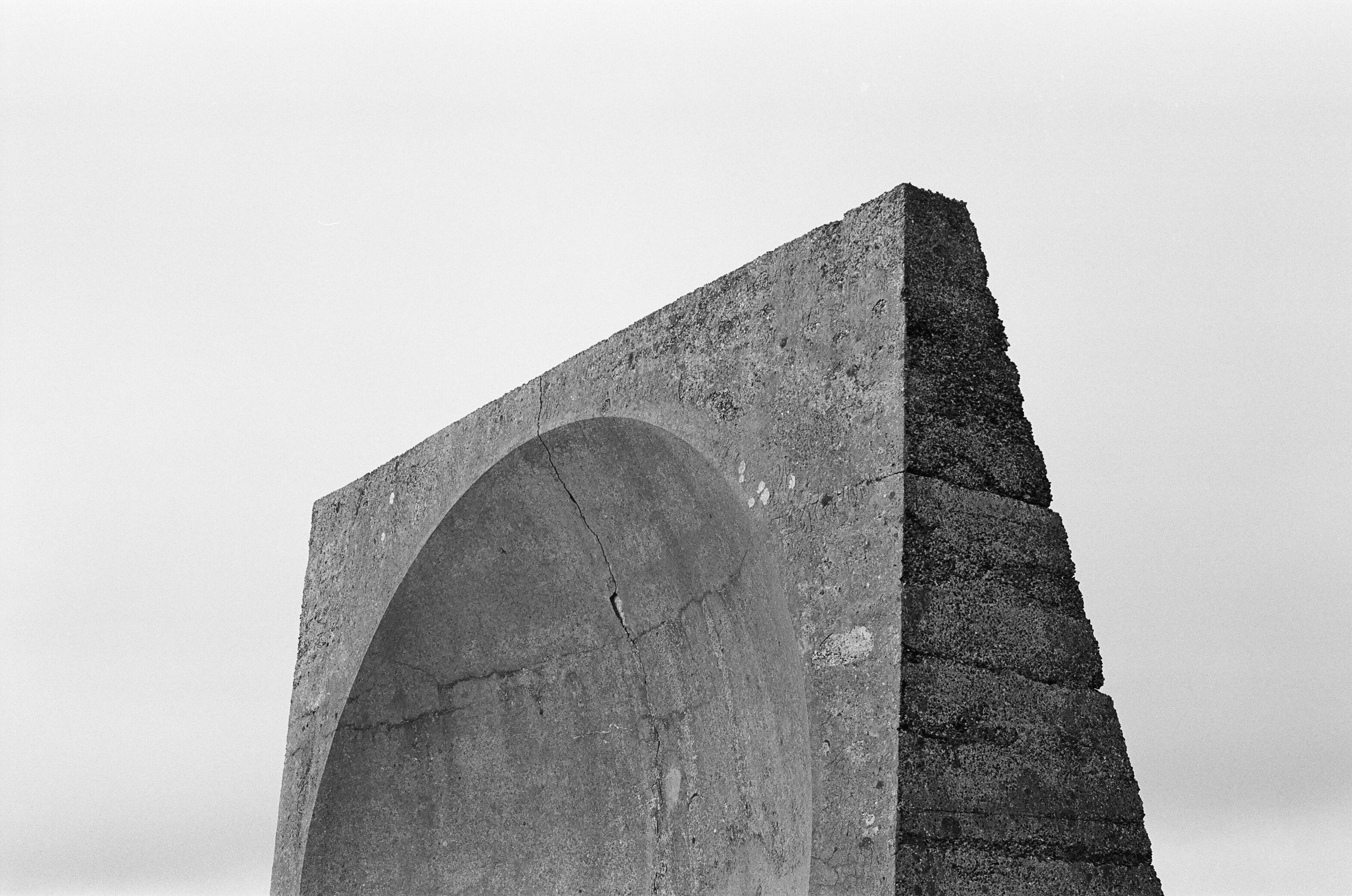
The concave shape was used to direct sound waves towards a microphone so that an operator could listen for the specific hum of approaching planes.
It is believed this gave them about fifteen minutes warning to prepare any necessary anti-aircraft defences.
From each of the two full rolls that I shot, and very soon after developed at home, I printed a contact sheet, and Aimee and I sat down a few days later to pick a few of the images to hopefully use for the prints.
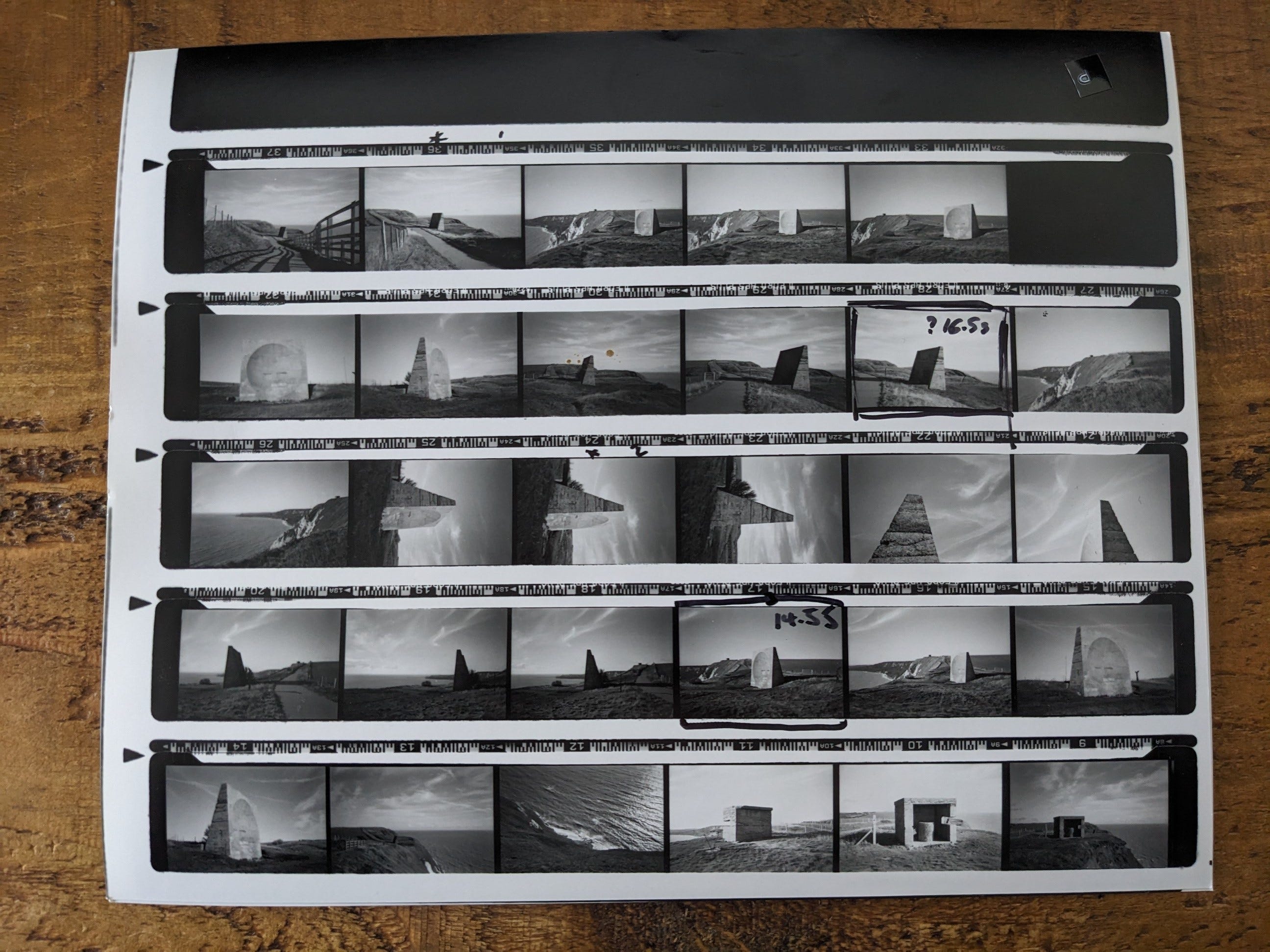
We chose three images including two of the Sound Mirror but also decided to use one of the equally curious concrete gun emplacement that sits very close by.
I spent the following weekend in the darkroom with those negatives, working out exposure / contrast and making some final prints that I felt I was happy with. (You can see a couple of my final exposure times are noted on the contact sheet above)

LAYOUT
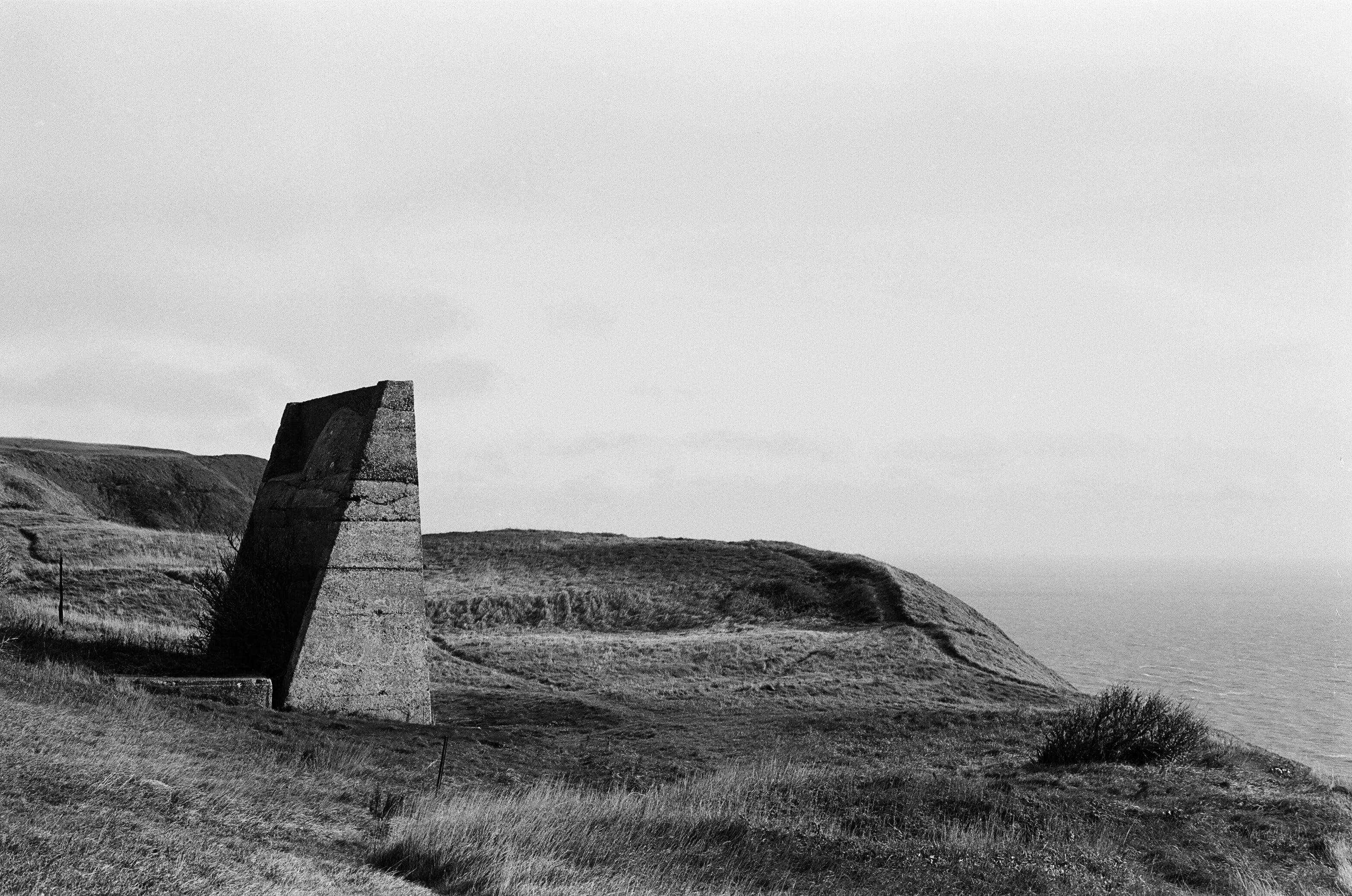
Unfortunately weather conditions affected how well the sound waves travelled and later development in aircraft design meant that planes became faster and harder to detect.
The subsequent development of radar led to the decline of these listening posts but several still remain as a reminder of this military heritage.
We hadn’t initially set out to create an accompanying zine for this project. At the point of making the prints I hadn’t thought any further about it but once I had finished in the darkroom and mounted up the prints I felt that it was a great subject and one that would work best with text as well as photographs.
Having mentioned it to Aimee she agreed it would make good content for a zine and I set to work arranging the images using InDesign and writing the text to give some historical background to the Sound Mirror and its original purpose on our coastline.

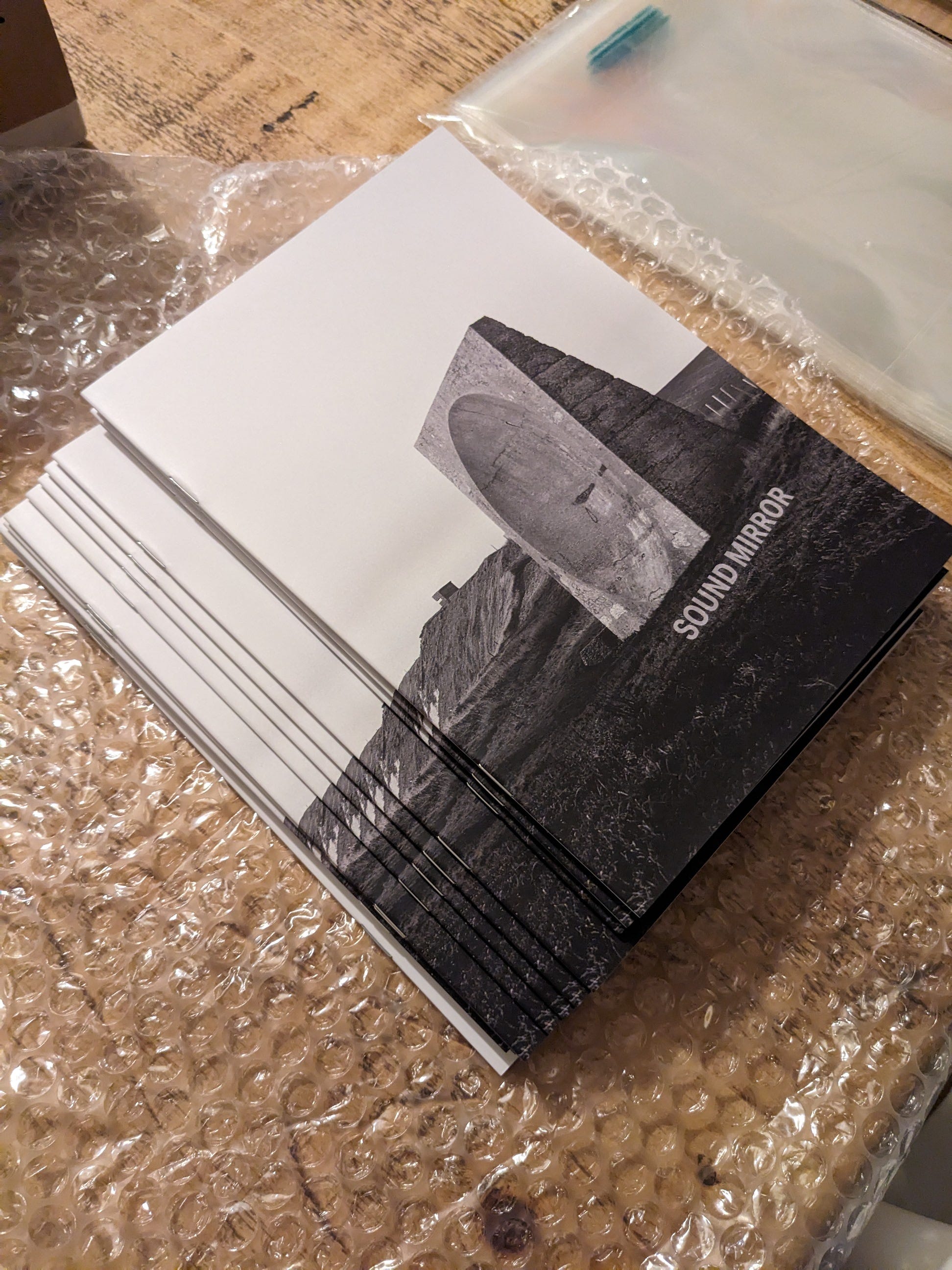
There are some copies of this zine still available at https://lukewayman.bigcartel.com/ and in Aimee’s shop here in Folkestone. So if you’re ever passing please check it out and also get a glimpse of her incredible jewellery inspired by the iconic Abbot’s Cliff Sound Mirror.
Thanks so much for reading! It’s been really enjoyable to force myself to think back a couple of years and write about this photographic project, hope you enjoyed it too.
Thanks
Beautiful images, I love the minimal ones. I’m in, subscribed
Super cool read Luke and love the collaboration between an artist in a different medium! I’ve just grabbed the zine as the cover just looks so cool. Thanks for sharing!